The world of luxury catamarans is changing. Owners are no longer looking only for more space, more comfort, or more impressive design. They also expect better efficiency, longer range, quieter operation, shallow-water access, and a yacht that feels more advanced in every detail.
This is where carbon fiber is becoming increasingly important. In modern yacht construction, carbon-fiber composites allow builders to create structures that are lighter, stiffer, and more efficient than many traditional materials. For catamarans, where weight, balance, draft, and interior volume are especially important, the choice of construction material can define the entire character of the yacht.
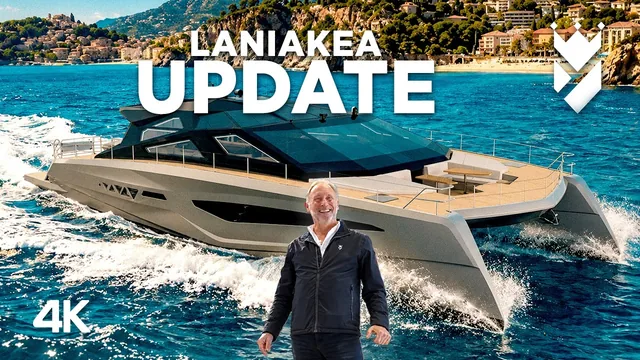
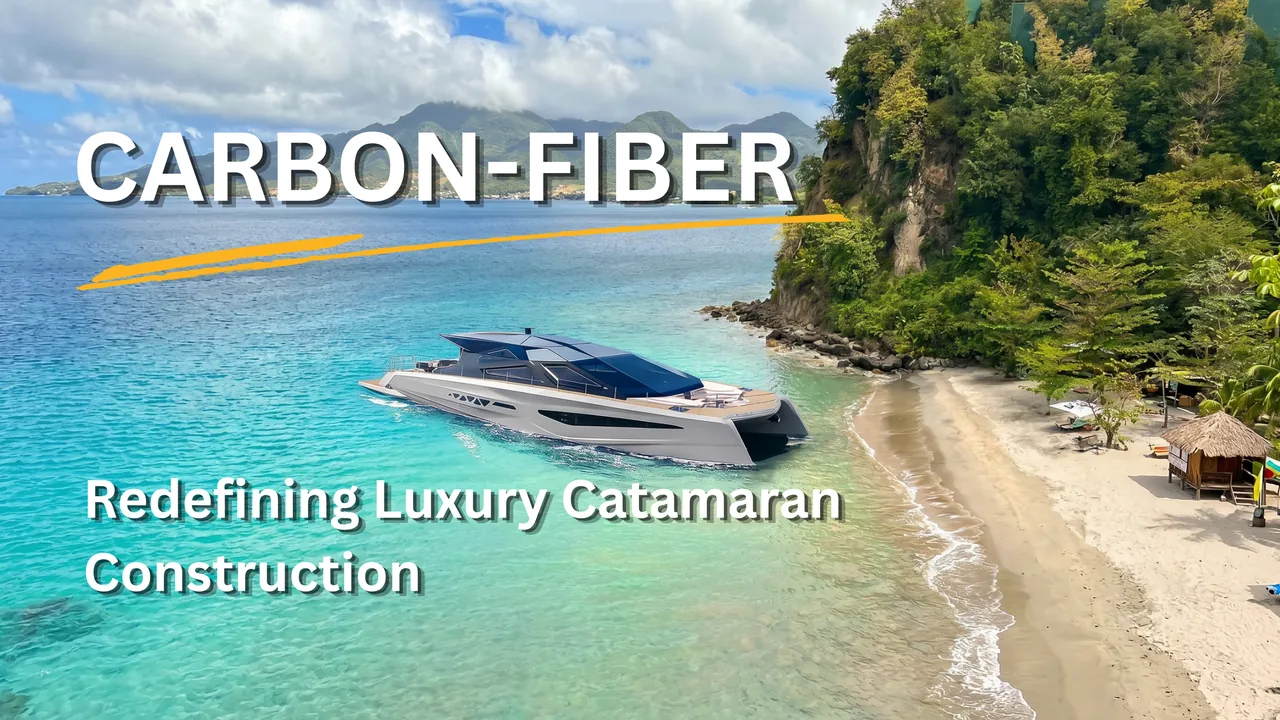
LANIAKEA, the 88-foot carbon-fiber power catamaran by Latitude Yachts, shows how this material can be used not only for performance, but also for comfort, design freedom, and a more refined onboard experience.
In this article, we will look at the:
- Main materials used in modern catamaran construction,
- How yacht building has evolved,
- How carbon fiber compares with fiberglass and aluminum,
- Why weight matters so much at sea,
- How carbon-fiber construction shapes the LANIAKEA experience.
What Materials Are Modern Catamarans Built From?
The choice of hull material has a direct influence on almost every aspect of a yacht: her weight, stiffness, performance, fuel efficiency, maintenance requirements, comfort, and long-term value.
Most modern cruising and luxury catamarans are built using one of four main construction materials:
- Fiberglass, also known as Glass-Reinforced Plastic or GRP
- Aluminum
- Steel
- Carbon-fiber composites
Each material has its own advantages and limitations. The right choice depends on the yacht’s intended use, size, performance expectations, build philosophy, and the level of luxury and efficiency the owner wants to achieve.
For production catamarans, fiberglass remains the most common choice. For larger commercial or explorer vessels, aluminum and steel are still widely used. At the highest end of performance and advanced yacht construction, carbon fiber is increasingly becoming the material that allows designers and builders to reduce weight, increase stiffness, improve efficiency, and create more ambitious luxury spaces.
Fiberglass (GRP)
Fiberglass, also known as Glass-Reinforced Plastic or GRP, remains the most widely used material in production yacht building. It is relatively cost-efficient, well understood by shipyards, and easy to mold into complex hull and deck shapes.
GRP construction is commonly used by high-volume catamaran builders because it allows consistent production, good surface finish, and flexible styling. Modern fiberglass catamarans are often built using manual layup, vacuum infusion, or resin-infusion methods, combined with balsa or foam cores to improve stiffness and reduce weight.
The main advantages of fiberglass are its corrosion resistance, scalable production process, and lower cost compared with carbon fiber. Its limitations are weight and stiffness. A fiberglass structure normally requires more material to achieve the same stiffness as carbon fiber, which can increase displacement and reduce performance efficiency.
Aluminum
Aluminum is valued for its durability, impact resistance, and lower weight compared with steel. It is often used for custom yachts, commercial vessels, expedition boats, and projects where toughness and repairability are important.
Aluminum can be welded, repaired, and formed into strong structural assemblies. It also performs well in demanding operating environments when properly engineered and protected.
However, aluminum construction has several limitations for luxury catamarans. It requires careful protection against galvanic corrosion, usually needs more internal framing, and can transmit more vibration and noise than composite structures. This can reduce interior comfort and may limit the freedom to create large open-plan spaces.
For this reason, full aluminum construction is less common in modern luxury catamarans, especially where low weight, quiet comfort, and refined interior volume are key priorities.
Steel
Steel is one of the most proven materials in marine construction. It remains widely used in commercial shipping, large explorer yachts, workboats, and vessels where maximum toughness and impact resistance are more important than weight.
Its main advantage is strength and durability. Steel can tolerate heavy use and is relatively straightforward to repair in many parts of the world.
For luxury catamarans, however, steel is rarely the preferred material. It is heavy, prone to corrosion if not properly maintained, and requires a more intensive maintenance regime. The additional weight reduces efficiency, increases draft, and works against many of the main advantages that catamaran buyers are looking for, including shallow-water access, speed, and lower fuel consumption.
Carbon-Fiber Composites
Carbon-fiber composites represent the most advanced end of modern yacht construction. Instead of relying on heavy metal structures or conventional fiberglass laminates, carbon fiber uses high-strength woven or unidirectional fibers combined with advanced resin systems, most commonly epoxy resin.
When engineered correctly, carbon fiber offers an exceptional strength-to-weight and stiffness-to-weight ratio. This allows a yacht to be lighter, stiffer, and more efficient, while still maintaining the structural strength required for offshore operation.
Carbon-fiber construction is typically combined with advanced production methods such as vacuum infusion, pre-preg layup, foam-core sandwich construction, and carefully controlled lamination processes. These methods help reduce unnecessary resin weight and create a strong, consistent composite structure.
The key advantages of carbon fiber are lower weight, high stiffness, corrosion resistance, improved performance, and greater design freedom. For a luxury catamaran, these benefits are especially important because they affect not only speed and fuel efficiency, but also comfort, noise reduction, draft, range, and the ability to create large open interior spaces.
This is why carbon fiber is increasingly being used by advanced catamaran builders and high-performance yacht projects. For LANIAKEA, carbon-fiber construction is not just a material choice. It is the foundation that makes her shallow draft, large living areas, efficient performance, and modern luxury concept possible.
The Evolution of Yacht Construction
Yacht construction has always evolved around one central question:
How to build a vessel that is strong enough for the sea, but light and efficient enough to perform well?
For much of the twentieth century, yachts were commonly built from wood, steel, and later fiberglass. Each material represented a major step forward at the time. Wood offered craftsmanship and tradition. Steel brought strength and durability. Fiberglass, which became widely adopted in yacht production during the second half of the twentieth century, changed the industry by making molded hulls easier to produce, repeatable, and more cost-efficient.
The next major development in yacht construction came from high-performance sailing. Carbon fiber was first adopted in racing environments, where every kilogram matters and structural stiffness can directly influence speed, handling, and safety. Over time, the same principles moved from racing yachts into advanced cruising yachts, luxury catamarans, and high-end custom builds.
Today, modern composite yacht construction is defined not only by the material itself, but also by the way it is engineered and built. Techniques such as vacuum infusion, pre-preg lamination, foam-core sandwich construction, and carefully controlled resin systems allow builders to create structures that are lighter, stiffer, and more consistent than traditional laminates.
For catamaran construction, this evolution is especially important because the platform is naturally sensitive to weight distribution, structural stiffness, and available volume. As owners expect larger interiors, quieter operation, better efficiency, and more refined design, traditional construction methods are being pushed to their limits.
Carbon fiber yacht construction marks the next step in this progression. It allows yacht builders to move beyond simply making a vessel strong enough, and instead engineer the structure around performance, efficiency, and design freedom from the start. In this sense, carbon construction is not just a material upgrade. It is part of the wider shift toward smarter, lighter, and more technically advanced luxury catamarans.
Carbon Fiber vs Fiberglass vs Aluminum
When comparing carbon fiber, fiberglass, and aluminum in yacht construction, the most important difference is not only strength. It is the relationship between strength, stiffness, weight, maintenance, and long-term performance.
Strength-to-Weight Ratio
Carbon fiber offers one of the highest strength-to-weight and stiffness-to-weight ratios used in modern yacht construction. This means a properly engineered carbon composite structure can achieve high structural performance with less weight than many traditional materials.
Fiberglass is strong and reliable, but it normally requires thicker and heavier laminates to achieve similar stiffness. Aluminum is also strong and durable, but it needs internal framing and careful structural design, which can add weight and reduce usable interior volume.
For luxury catamarans, this difference is important because lower structural weight can improve efficiency, handling, range, and comfort, while also giving designers more freedom in the layout.
Corrosion and Longevity
Carbon fiber composites do not corrode like metal structures. When properly engineered, built, and maintained, they can offer a long service life with reduced exposure to corrosion-related maintenance.
Fiberglass is also corrosion resistant, which is one of the reasons it became so widely used in yacht construction. However, older or poorly built fiberglass structures can be affected by moisture ingress, osmosis, or core-related issues.
Aluminum is durable, but it requires proper protection against galvanic corrosion, especially in a marine environment where different metals, electrical systems, and salt water are present.
Weight and Performance
Weight has a direct effect on yacht performance. A lighter yacht generally requires less power to move through the water, which can improve acceleration, fuel efficiency, cruising range, and overall responsiveness.
Compared with conventional fiberglass construction, carbon fiber can reduce structural weight significantly when the yacht is designed and engineered around the material from the beginning. This is especially valuable for catamarans, where weight distribution affects draft, trim, efficiency, and ride quality.
The result is not only higher speed potential, but also a more efficient cruising platform with less unnecessary displacement.
Cost Considerations
Carbon fiber is more expensive than fiberglass and, in many cases, more expensive than aluminum construction. The material itself costs more, and the production process requires greater technical control, skilled labor, and precise engineering.
Fiberglass remains the most cost-effective and widely used solution for production catamarans. Aluminum sits in the middle for many custom and commercial applications, offering durability but requiring more maintenance attention.
For high-end luxury yacht buyers, the higher cost of carbon fiber can be justified when performance, efficiency, shallow draft, quiet comfort, and advanced design are key priorities.
Vibration and Noise
A well-engineered carbon composite structure can help reduce hull flex and improve structural stiffness. This can contribute to a quieter and more refined onboard experience, especially when combined with good acoustic insulation, careful machinery installation, and modern propulsion systems.
For luxury catamarans, this matters because comfort is not only about interior finishes. It is also about how the yacht feels underway: the level of vibration, structural movement, engine noise, and general calm on board.
Environmental Efficiency
Carbon fiber should not be described as automatically sustainable, because its production is energy-intensive. Its environmental advantage comes mainly from the efficiency it can create during the yacht’s operational life.
A lighter yacht can require less power, consume less fuel, and produce lower emissions in use. It can also support hybrid systems, larger battery capacity, and solar integration more effectively because less energy is wasted moving unnecessary weight.
In this sense, carbon fiber contributes to a more efficient yacht platform, especially when it is part of a broader design strategy focused on weight reduction, energy management, and long-term performance.
Why Weight Matters at Sea
Weight is one of the most important factors in yacht design. It affects how a yacht accelerates, how much fuel she consumes, how far she can travel, how shallow she can operate, and how comfortable she feels underway.
For catamarans, weight is especially critical. A catamaran relies on two slender hulls to move efficiently through the water. When unnecessary weight is added, the hulls sit deeper, drag increases, and the yacht requires more power to maintain speed. This can reduce range, increase fuel consumption, and affect the overall balance of the vessel.
Lower weight also helps preserve one of the key advantages of a catamaran: shallow draft. A lighter structure allows the yacht to sit higher in the water, giving owners better access to shallow bays, lagoons, island anchorages, and coastal areas that are difficult for deeper-draft yachts to reach.
Weight also influences comfort. A well-balanced, lightweight yacht can feel more responsive and efficient underway, with less strain on the propulsion system and a smoother overall cruising experience. When combined with high structural stiffness, the result is a platform that feels stronger, quieter, and more refined.
This is why carbon fiber is so valuable in advanced catamaran construction. It allows designers to reduce structural weight without sacrificing strength, helping the yacht achieve better efficiency, better performance, and greater freedom in both layout and operation.
Why Carbon Fiber Is Becoming the Future
Carbon fiber is becoming more important in luxury catamaran construction because owner expectations are changing. Today’s buyers are not only looking for size and interior volume. They also expect efficiency, range, quiet comfort, shallow-water access, and a more modern onboard experience.
Performance, Efficiency, and Range
One of the main drivers is the demand for better performance and fuel efficiency. A lighter carbon-fiber catamaran can require less power to achieve the same cruising speed, which can improve fuel consumption, range, and overall responsiveness. For owners who want both comfort and performance, weight reduction is no longer only a technical detail. It is part of the luxury experience.
The growth of hybrid and electric propulsion is another important factor. Battery systems, solar panels, energy management, and silent operation all benefit from a lighter platform. The less energy a yacht needs to move, the more effectively hybrid systems and onboard batteries can support quiet cruising, hotel loads, and efficient operation.
Design Freedom and Modern Luxury
Carbon fiber also supports the design direction of modern luxury yachts. Owners increasingly want open-plan interiors, large windows, panoramic glazing, and generous living areas. A stiff, lightweight composite structure gives designers and engineers more freedom to create these spaces without adding unnecessary weight.
For catamarans, carbon construction also helps preserve shallow draft and access to more remote destinations. A lighter yacht can sit higher in the water, making it easier to reach lagoons, quiet anchorages, island bays, and coastal areas that are often inaccessible to deeper-draft yachts.
Finally, full carbon-fiber construction remains rare in the luxury yacht market. This gives carbon catamarans a level of exclusivity that goes beyond styling or interior finishes. It reflects a more advanced approach to yacht building, where material choice, engineering, performance, and design are all part of the same vision.
How Carbon Fiber Shapes the LANIAKEA Experience
For LANIAKEA, carbon fiber is not used only as a premium material. It is part of the yacht's and shipyard's entire design philosophy. Her carbon-fiber construction supports the way she performs, the way she feels on board, and the kind of destinations she can reach.
Full Carbon-Fiber Construction
Unlike many yachts that use carbon fiber only in selected areas, LANIAKEA is designed with a carbon-fiber hull and superstructure. This lightweight composite structure helps reduce unnecessary weight while maintaining the strength and stiffness required for offshore operation.
The result is a more efficient platform with a shallow draft of approximately 0.61 m, generous interior volume, and strong structural performance. For an 88-foot power catamaran, this combination is central to her concept.
More Space Without Unnecessary Weight
One of the key advantages of carbon construction is that it allows designers to create larger and more open spaces without adding excessive structural weight. This is especially important on a luxury catamaran, where owners expect panoramic glazing, open-plan living areas, high ceilings, and a strong connection between interior and exterior spaces.
On LANIAKEA, this supports the large main salon, wide living areas, and modern architectural layout created by Chulhun Park. The yacht is designed to feel open, light, and connected to the sea, while still benefiting from the strength of a carbon-composite structure.
Quiet Comfort and Efficient Cruising
Luxury is not only about visible finishes. It is also about how the yacht feels when she is under way. A stiff carbon structure can help reduce unwanted flexing and contribute to a more solid, refined onboard experience.
Combined with careful engineering, battery capacity, solar charging, and quiet operation modes, LANIAKEA is designed to offer a calmer cruising experience with reduced noise and vibration. This supports longer time on board, more comfortable passages, and a more relaxed atmosphere for owners and guests.
Shallow-Water Freedom
LANIAKEA’s lightweight construction helps preserve one of the most valuable advantages of a power catamaran: shallow draft. With an approximate draft of 0.61 m, she can access quiet anchorages, island bays, shallow lagoons, and coastal areas that are difficult for many deeper-draft yachts to reach.
For owners, this creates a different kind of freedom. The yacht is not limited only to marinas and traditional cruising routes. She is designed for private, less crowded, and more flexible cruising experiences.
A More Advanced Type of Luxury Catamaran
Full carbon-fiber construction remains rare in the luxury power catamaran market. This gives LANIAKEA a level of distinction that goes beyond styling. Her value comes from the combination of material choice, engineering, design, performance, and onboard comfort.
In this sense, LANIAKEA represents the direction in which high-end yacht construction is moving: lighter structures, more efficient propulsion, larger living spaces, quieter operation, and a more intelligent use of advanced materials.
Conclusion
Carbon fiber is changing luxury catamaran construction because it addresses some of the most important demands in modern yacht design:
- Lower weight,
- Higher stiffness,
- Better efficiency,
- Greater comfort,
- More freedom for designers and owners.
Compared with traditional materials such as fiberglass, aluminum, and steel, carbon-fiber composites allow yacht builders to create lighter and more advanced structures without compromising strength. For catamarans, where weight, draft, balance, and interior volume are especially important, these advantages can define the entire character of the yacht.
LANIAKEA shows how this approach can be applied to a new generation of power catamarans. Her carbon-fiber construction supports shallow-water access, generous living spaces, quiet comfort, efficient cruising, and a more modern onboard experience.
For owners seeking a luxury catamaran that combines performance, space, exclusivity, and advanced engineering, carbon fiber is no longer only a high-performance material. It is becoming one of the key foundations of the future of yacht construction
Carbon Fiber & Construction FAQ
Carbon fiber is used in luxury catamaran construction because it offers a high strength-to-weight and stiffness-to-weight ratio. This allows builders to create lighter, stronger, and more efficient structures, which can improve performance, range, shallow draft, and onboard comfort.
For high-performance and luxury catamarans, carbon fiber can offer important advantages over fiberglass, especially in weight reduction and stiffness. Fiberglass remains widely used because it is more cost-efficient, but carbon fiber allows a more advanced structure when performance, efficiency, and design freedom are priorities.
Carbon-fiber yachts require regular inspections and proper care, like any advanced yacht. However, carbon-fiber composites do not corrode like metal structures, which can reduce some corrosion-related maintenance compared with aluminum or steel yachts.
The main disadvantage of carbon fiber is cost. The material itself is more expensive, and the construction process requires skilled labor, precise engineering, and strict quality control. This is why full carbon-fiber construction is more common in high-end and performance-focused yacht projects.
LANIAKEA has an approximate draft of 0.61 m, which allows her to access shallow bays, lagoons, island anchorages, and coastal areas that are difficult for many deeper-draft yachts to reach. This gives owners more freedom when choosing private and less crowded cruising destinations.
LANIAKEA is an 88-foot carbon-fiber power catamaran by Latitude Yachts. Her concept combines carbon-fiber construction, shallow draft, generous interior volume, quiet comfort, and modern architectural design by Chulhun Park. This makes her more than a traditional luxury catamaran. She is designed as a lightweight, efficient, and advanced cruising platform.
Carbon fiber itself is energy-intensive to produce, so it should not be described as automatically sustainable. Its environmental advantage comes mainly from operational efficiency. A lighter yacht can require less power, consume less fuel, and support battery systems, solar charging, and quieter operation more effectively.
A properly engineered and well-maintained carbon-fiber yacht can enjoy a long service life. Its longevity ultimately depends on the quality of its construction, ongoing care, and how it is operated over time.
Interested in learning more about LANIAKEA or discussing your own custom yacht project?
Contact Us