Why Are Ultra-Shallow Draft Catamarans Better for Remote Anchorages?
Ultra-shallow draft catamarans can access bays, lagoons, sandbanks, and reef-protected anchorages that are often unsuitable for deeper-draft yachts. Their twin-hull design also provides a stable platform, generous interior volume, and efficient low-speed cruising. However, shallow draft does not remove the need for careful navigation, local knowledge, tide planning, or protection of coral and seagrass areas.
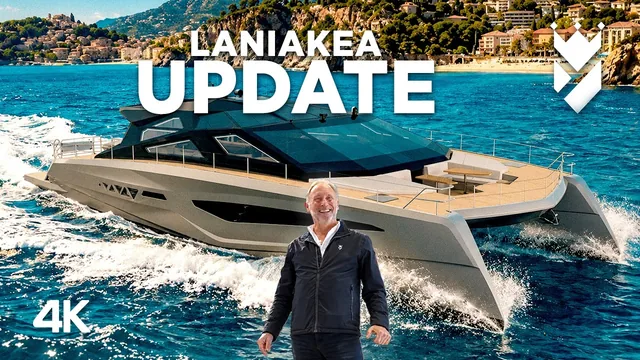
LANIAKEA is an 88-foot carbon-fiber power catamaran built by Latitude Yachts in Riga, Latvia, with naval architecture by Dixon Yacht Design and exterior and interior design by Chulhun Park.
The Luxury of Less Water Under the Keel
A deep-draft yacht sees the coast from a polite distance. An ultra-shallow draft catamaran changes the geometry of a voyage. You can ease across sand flats in the Bahamas, nose toward a lagoon rim in French Polynesia, settle behind a reef in the Grenadines, or step from the stern into warm water that barely reaches your waist.
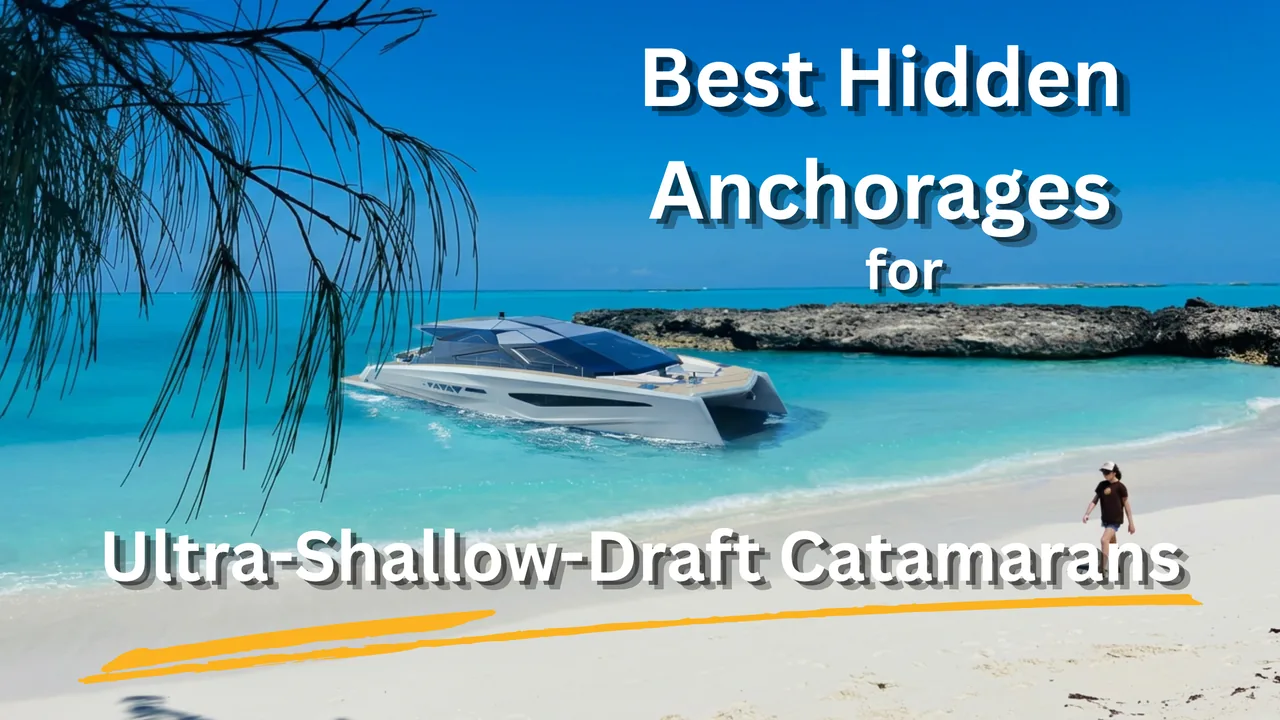
This is the quiet appeal of shallow draft cruising: access. A yacht that draws around two feet, such as the LANIAKEA 88-ft carbon-fiber power catamaran with published draft figures around 0.61 to 0.62 meters, opens routes that captains of deeper monohulls must treat with caution. The yacht becomes less dependent on marinas, tenders, and crowded deep-water anchorages. You can use the landscape itself: sand, mangrove, coral pass, beach, cay, lagoon.
Shallow draft does not excuse careless seamanship. It demands more of it. Reef systems, seagrass meadows, turtle grass, coral heads, and atoll passes punish shortcuts. The best captains still read tide tables, watch color changes in the water, favor sand over living bottom, use moorings where authorities provide them, and keep engines out of fragile shallows.
For owners, guests, charter brokers, and itinerary planners, the following luxury catamaran destinations offer something rare: real hidden anchorages, secluded bays, sandbars, reef-protected lagoons, and island-hopping routes where a shallow draft yacht gives you more than comfort. It gives you range.
The Bahamas: Exumas, Abacos, and Eleuthera
Overview
The Bahamas may be the purest shallow-water cruising ground on earth. The Exumas alone string together cays, banks, cuts, blue holes, beaches, and sandbars in a way that rewards a captain who can read water by shade. The Bahamas National Trust describes the Exuma Cays Land and Sea Park as 112,640 acres of protected land and sea, with beaches, biodiversity, and safe anchorages. The Abacos, branded by The Bahamas as the country’s boating capital, give you a gentler rhythm across the Sea of Abaco. Eleuthera and Spanish Wells add long beaches, cays, and sandbars with a more local, less staged feel.
Hidden Lagoons, Sandbars, and Shallow-Draft Access
In the Exumas, shallow draft lets you work the margins: the sand tongues around Pipe Creek, the banks near Staniel Cay, the blue water and pale sand around Compass Cay, and the sheltered approaches near Warderick Wells. A deeper yacht can enjoy the Exumas, but a shallow draft yacht can sit closer to the beach, choose smaller sand pockets, and move with the tide through channels that turn from turquoise to bone-white at low water.
The Abacos offer protected island hopping between Elbow Cay, Green Turtle Cay, Man-O-War Cay, and Great Guana Cay. Eleuthera’s northern cays and Spanish Wells reward smaller drafts with flats-style cruising, sandbar picnics, paddleboarding, and tender-free swims in water that looks too clear to hold a boat.
Experiences, Season, and Captain’s Notes
Days here should move slowly: drift snorkel Thunderball Grotto at the right tide, walk Boo Boo Hill in the Exuma park, take a chef-prepared lunch to a sandbar, bonefish the flats with a local guide, or run the tender into mangrove creeks where the mothership waits in clear sand.
Best time: December through April brings the most settled winter cruising. May and June can be superb with warmer water and thinner crowds. Hurricane season runs June through November, with August, September, and early October carrying higher risk.
Navigation and environment: the Exumas demand tidal planning. Many cuts rage in wind-against-tide conditions. In the park, follow Bahamas National Trust rules, pay required fees, avoid taking marine life, and use designated moorings or sand-bottom anchoring where allowed. Nearby itinerary links include Nassau, Highbourne Cay, Staniel Cay, Black Point, Harbour Island, and the Abacos for a longer Bahamas circuit.
British Virgin Islands: Anegada and the Outer Edges
Overview
Most BVI yacht itineraries orbit Tortola, Virgin Gorda, Jost Van Dyke, and Norman Island. Anegada changes the mood. The island sits low, reef-ringed, and pale, with beaches such as Cow Wreck, Loblolly Bay, Bones Bight, and Windlass Bight named by the BVI tourist board as quiet shores for swimming and sunbathing.
Why Shallow Draft Matters
Anegada’s beauty comes from the same feature that demands care: reef. Sunsail notes the island’s long horseshoe reef and the need to use the marked approach to Setting Point. A shallow draft catamaran does not remove that responsibility, but it gives the skipper more comfort inside protected water once safely arrived. Guests get the rare BVI feeling of open space: no hillside villas stacked above the anchorage, no parade of beach bars, no deep-water harbor dictating the day.
Experiences, Season, and Captain’s Notes
Anegada works best as a two-night pause. Eat lobster ashore, run a beach buggy to Cow Wreck, snorkel Loblolly, and let the yacht sit in quiet water while the rest of the BVI fleet crowds the familiar loops.
Best time: December through April gives the driest weather and steadier trades. Summer can be beautiful, but tropical storm planning belongs in every itinerary from June through November.
Navigation and environment: approach by the marked channel in good light. Avoid reef shortcuts. Nearby planning links include North Sound, Virgin Gorda, Jost Van Dyke, Cooper Island, and a longer easterly reach to St. Martin if weather and clearance logistics suit the yacht.
Antigua, Barbuda, and St. Martin: Reefs, Birds, and Beach-Only Islands
Overview
Antigua and Barbuda suit yacht guests who want both polish and wildness. Antigua gives you English Harbour, restaurants, regatta history, and protected anchorages. Barbuda gives you pink-tinged beaches, Codrington Lagoon, and the Frigate Bird Sanctuary, which Antigua and Barbuda’s tourism authority says is accessible only by boat. St. Martin adds Pinel Island, Tintamarre, and the French-side nature reserve.
Hidden Anchorages and Shallow-Draft Access
Antigua’s North Sound, Great Bird Island, Green Island, and Nonsuch Bay reward a yacht that can sit inside reef-fringed water without needing a deep basin. Great Bird Island and nearby cays feel made for paddleboards, snorkeling, and late-afternoon swims.
Barbuda asks for a different style: low-profile coastal cruising, beach landings, and respect for a landscape that remains fragile. A shallow draft yacht can lie off beaches and lagoon approaches in a way that keeps guests close to the sand while avoiding the churn of larger vessels.
On St. Martin, Pinel Island sits inside shallow, calm water, while Tintamarre falls within the Réserve Naturelle Nationale de Saint-Martin. The reserve lists moorings at Tintamarre and limits anchoring to sandy bottom for smaller boats. Larger yachts need to treat the reserve as a regulated marine site, not a casual anchorage.
Experiences, Season, and Captain’s Notes
Plan Antigua for a balance of lunch ashore and reef time: Green Island, Great Bird Island, Carlisle Bay, and English Harbour. In Barbuda, arrange local guides for Codrington Lagoon and the frigate birds. In St. Martin, use Pinel and Tintamarre for day stops, snorkeling, and nature reserve cruising.
Best time: December through April for the northern Leewards. May can work well. Monitor tropical systems from June through November.
Navigation and environment: Antigua’s reefs require eyeball navigation in places. Barbuda’s low coast offers few visual references. In St. Martin’s reserve, confirm current mooring, anchoring, and overnight rules before arrival. Nearby itinerary links include St. Barts, Anguilla, Nevis, and Guadeloupe.
Tobago Cays: The Grenadines Inside the Reef
Overview
The Tobago Cays sit at the heart of the Southern Grenadines: small, uninhabited islands, turtle grass, coral, and Horseshoe Reef. This is one of the Caribbean’s classic shallow-water yacht experiences.
Why It Is Unique
The magic lies in proximity. You anchor or moor inside a reef-framed lagoon, swim with turtles near Baradal, watch kite sails move across turquoise water, and dine aboard while the reef breaks white in the distance. Tobago Cays Marine Park rules prohibit anchoring in coral or seagrass, direct boats toward moorings or sandy areas, ban fishing, and set a five-knot speed limit.
Experiences, Season, and Captain’s Notes
Guests come for snorkeling, turtles, beach barbecues arranged with licensed local operators, paddleboarding, and drone-worthy water color. Shallow draft helps a yacht choose sand patches with less scope and less swing, but the skipper must still protect the bottom.
Best time: December through May, with January to April offering classic trade-wind sailing. The southern Caribbean sits outside the highest-risk hurricane belt, but captains still monitor tropical weather.
Navigation and environment: use moorings where suitable, inspect gear, and keep anchors out of coral and seagrass. Nearby itinerary links include Bequia, Mustique, Canouan, Mayreau, Union Island, Palm Island, and Petit St. Vincent.
Florida Keys and Dry Tortugas: Coral, Seagrass, and Fort Jefferson
Overview
The Florida Keys and Dry Tortugas give U.S.-based yacht owners a rare mix: protected coral reef, history, shallow banks, and blue-water remoteness. The Dry Tortugas sit far west of Key West, with Fort Jefferson rising from Garden Key like a brick mirage.
Shallow-Draft Access
In the Keys, shallow draft helps around flats, backcountry routes, and sand-bottom anchorages, but the region leaves no room for careless prop wash. NOAA’s Florida Keys National Marine Sanctuary provides more than 600 first-come, first-served mooring buoys and prohibits anchoring on living coral. In the Dry Tortugas, the National Park Service allows overnight anchoring only on sandy bottom within one nautical mile of the Garden Key lighthouse, outside restricted zones. The Research Natural Area prohibits anchoring, with day-use mooring buoys available for limited periods.
Experiences, Season, and Captain’s Notes
Build a yacht itinerary from Key Largo or Islamorada through Marathon, the Marquesas, and Key West, then wait for a settled weather window for the Dry Tortugas. Guests can snorkel reef moorings, fish where legal, kayak mangrove edges, tour Fort Jefferson, and enjoy one of the most dramatic anchorages in U.S. waters.
Best time: November through May. Winter fronts can be sharp, so watch northers. Summer brings heat, thunderstorms, and hurricane exposure.
Navigation and environment: favor moorings on reef sites, anchor only in sand where allowed, and keep clear of seagrass. Nearby planning links include Key West, Marquesas Keys, Boca Grande Key, Garden Key, Loggerhead Key day visits, and the Marquesas as a weather stop.
Belize: Barrier Reef, Atolls, and Mangrove Cayes
Overview
Belize gives shallow-draft catamarans an extraordinary mix of reef, mangrove, cayes, and offshore atolls. UNESCO lists the Belize Barrier Reef Reserve System as seven protected areas, including Blue Hole Natural Monument, Half Moon Caye Natural Monument, South Water Caye Marine Reserve, Glover’s Reef Marine Reserve, Laughing Bird Caye National Park, Bacalar Chico, and Sapodilla Cayes.
Why It Is Unique
Belize feels built for a shallow draft yacht: coral-sand cayes, mangrove islands, reef cuts, and anchorages tucked behind the barrier reef. South Water Caye, Tobacco Caye, Glover’s Reef, Turneffe, and the Sapodillas all invite a mix of expedition planning and relaxed luxury cruising.
Experiences, Season, and Captain’s Notes
Guests can dive the Blue Hole with a specialist operator, snorkel patch reefs, kayak mangroves, fish under local rules, visit island lodges for lunch, and run a chef-led beach barbecue on a sand caye where permitted.
Best time: December through May, with the driest weather and calmer seas. Summer and autumn need storm planning.
Navigation and environment: Belize has coral heads, shoals, and park zones that require local knowledge. Hire a Belizean captain or guide for reef passages when needed. Nearby itinerary links include Ambergris Caye, Caye Caulker, Turneffe, Lighthouse Reef, Glover’s Reef, Placencia, and the Sapodilla Cayes.
Mexico: Sea of Cortez and Riviera Maya
Overview
Mexico offers two very different shallow-water stories. The Sea of Cortez is arid, wild, and volcanic. UNESCO describes the Islands and Protected Areas of the Gulf of California as a vast system of islands, islets, and coastal areas with exceptional oceanographic importance. On the Caribbean side, Sian Ka’an Biosphere Reserve protects tropical forest, mangroves, marshes, and a marine section intersected by a barrier reef.
Hidden Anchorages and Lagoons
In the Sea of Cortez, shallow draft helps around Isla Espíritu Santo, Isla Partida, Bahía de Loreto, Isla Carmen, and Bahía Concepción. The reward is stark: red cliffs, clear water, whale sightings in season, deserted coves, and anchorages where the desert reaches the tide line.
On the Riviera Maya, Sian Ka’an and the Punta Allen region offer lagoon, mangrove, reef, and flats experiences better suited to shallow tenders and carefully managed small-craft excursions than large-yacht intrusion. A shallow draft mothership can base nearby while guests explore with licensed local operators.
Experiences, Season, and Captain’s Notes
In Baja, guests can kayak sea caves, dive sea lion sites with guides, hike desert trails, and dine under dark skies. In Sian Ka’an, plan birding, lagoon drifting, snorkeling, and cultural visits with community operators.
Best time: Sea of Cortez cruising shines from October through June, with wildlife highlights varying by month. Riviera Maya is strongest from December through April, with hurricane planning from June through November.
Navigation and environment: Baja anchorages can switch character with wind direction. In Sian Ka’an, respect biosphere rules and use local guides. Nearby links include La Paz, Loreto, Puerto Escondido, Isla Mujeres, Cozumel, and Tulum by land transfer.
French Polynesia: Tuamotus, Society Islands, and Lagoon Passes
Overview
French Polynesia is the spiritual home of lagoon cruising. Bora Bora, Raiatea, Taha’a, Huahine, Rangiroa, Tikehau, and Fakarava offer reef-protected water at a scale that few destinations can match. UNESCO’s Man and the Biosphere Programme describes Fakarava’s reserve as a landscape of coral formations, seagrass beds, kopara ponds, forests, coconut groves, and protected species.
Why Shallow Draft Matters
A shallow draft catamaran can sit inside lagoons with a freedom deeper yachts lack, especially along motu edges and sand shelves. In the Tuamotus, this matters. Atoll passes can run hard; once inside, the lagoon may hold coral heads, pearl farms, and isolated motu anchorages where the water depth changes with little warning.
Experiences, Season, and Captain’s Notes
Plan drift dives in Fakarava’s passes with local operators, picnic on a private motu, visit pearl farms, paddle the reef flats, and spend nights under some of the clearest skies in the Pacific.
Best time: May through October for drier weather and stronger cruising reliability. Shoulder months can be rewarding.
Navigation and environment: time atoll passes with current, swell, and light. Use local pilotage, maintain a bow watch in coral-head areas, and anchor only where allowed. Nearby links include Tahiti, Moorea, Raiatea, Taha’a, Bora Bora, Rangiroa, Tikehau, Fakarava, and Toau.
Maldives: Atoll Hopping in the Indian Ocean
Overview
The Maldives turns shallow-water cruising into a national geography: atolls, reef rims, resort islands, inhabited islands, uninhabited sand cays, and lagoon shelves. Visit Maldives notes the northeast monsoon from November to April is generally sunny, while the southwest monsoon from May to October brings rain.
Hidden Lagoons and Sandbars
The yacht experience revolves around lagoon color and access. A shallow draft yacht can sit inside calm water near sandbanks, reach resort lagoons by arrangement, and hop between atolls with less dependence on deep harbor infrastructure. North Malé, Baa, Ari, Vaavu, and Laamu each offer a different balance of resort luxury, diving, manta encounters, and quiet reef cruising.
Experiences, Season, and Captain’s Notes
Guests come for overwater dining, private sandbank breakfasts, diving, surfing in season, manta and whale shark encounters, spa transfers, and night snorkeling. South Ari Marine Protected Area is known for year-round whale shark presence, but vessel activity there now requires close attention to management rules.
Best time: November through April for settled weather, with January through March often favored for yacht itineraries. The southwest monsoon can still work for specialist surf and manta trips.
Navigation and environment: reef passes, coral shelves, and protected-area rules require local captaincy. Use moorings where provided and avoid anchoring in MPAs or on coral. Nearby links include Malé, Baa Atoll, Ari Atoll, Vaavu, Laamu, and private resort collaborations.
Seychelles: Inner Islands and the Outer Atolls
Overview
Seychelles splits into two yacht worlds. The Inner Islands offer granite drama, beaches, and resort infrastructure around Mahé, Praslin, La Digue, Curieuse, and Sainte Anne. The Outer Islands, including Aldabra, Cosmoledo, Astove, and Farquhar, belong to expedition planning.
Why It Is Unique
Aldabra sets the standard for remote shallow-lagoon wilderness. UNESCO describes Aldabra as four large coral islands enclosing a shallow lagoon, with a surrounding reef and extreme isolation. The Seychelles Islands Foundation states Aldabra lies more than 1,000 kilometers southwest of Mahé and includes an extensive protected area covering lagoon, land, and marine habitats.
Experiences, Season, and Captain’s Notes
In the Inner Islands, plan beach landings, giant tortoise encounters on Curieuse, diving, Creole dining, and short passages between sculpted granite islands. In the Outer Islands, luxury becomes expedition-grade: fly-fishing, diving, wildlife observation, and strict conservation protocols.
Best time: April, May, October, and November often bring lighter winds between monsoon patterns. Southeast trade-wind months can be windier and better for experienced crews.
Navigation and environment: Outer Island visits require permits, logistics, and conservation compliance. Aldabra tourism remains limited for good reason. Nearby links include Mahé, Praslin, La Digue, Curieuse, Silhouette, Alphonse, Cosmoledo, Astove, and Aldabra by expedition arrangement.
Whitsundays: Whitehaven, Hill Inlet, and Reef-Protected Bays
Overview
The Whitsundays offer one of the world’s great charter grounds inside the Great Barrier Reef Marine Park. Whitehaven Beach and Hill Inlet sit at the center of the imagery: white silica sand, blue water, tidal swirls, and rainforest headlands.
Hidden Bays and Shallow-Draft Access
A shallow draft catamaran lets you work closer to beaches and protected bays around Whitsunday Island, Hook Island, Border Island, and the northern anchorages when rules allow. Tourism Whitsundays notes Hill Inlet looks most dramatic around mid to low tide, when white sand patterns show through the water.
Experiences, Season, and Captain’s Notes
Guests can walk to Hill Inlet Lookout from Tongue Bay, snorkel reef sites, use public moorings, picnic on Whitehaven, and overnight away from day-trip traffic. The luxury lies in timing: sunrise at the lookout, early swims, and quiet evenings after the tour boats leave.
Best time: May through October for drier, cooler conditions. Stinger season generally affects warmer months, so use local advice and protective suits where recommended.
Navigation and environment: the Great Barrier Reef Marine Park Authority maintains moorings and no-anchoring areas to prevent coral damage. Use zoning maps and avoid reef flats. Nearby links include Hamilton Island, Airlie Beach, Hook Island, Border Island, Hayman Island, and the outer reef by weather window.
Croatia: Kornati, Dalmatian Coves, and Clear-Water Stone
Overview
Croatia does not offer tropical shallows, but it offers a Mediterranean version of hidden anchorages: limestone islands, clear water, small coves, and old stone villages. Kornati National Park is the essential shallow-water chapter for catamarans that want to move beyond marinas.
Why Shallow Draft Matters
The advantage in Croatia lies in cove selection. A shallower yacht can sit farther inside bays, reduce exposure, and approach swimming coves that deeper yachts avoid. Kornati National Park lists specific bays and coves where anchoring and overnighting are permitted, including Stiniva, Lupeška, Šipnate, Lavsa, Piškera, Ravni Žakan, and others.
Experiences, Season, and Captain’s Notes
Cruise from Šibenik or Zadar through Kornati, Telašćica, Žut, Murter, and the Šibenik archipelago. Guests get long lunches at konobas, swims off limestone shelves, paddleboards in clear water, and evenings under a sky with very little shore light.
Best time: May, June, September, and early October. July and August bring heat and crowds.
Navigation and environment: Croatia now places more emphasis on mooring fields, park tickets, and seagrass protection. Use official park rules, avoid Posidonia, and respect bora and jugo forecasts. Nearby links include Zadar, Šibenik, Telašćica, Primošten, Hvar, Vis, and the Elafiti Islands near Dubrovnik.
Greece: Ionian Bays, Small Cyclades, and Marine Parks
Overview
Greece rewards shallow draft in a different way from the Bahamas. The water shelves fast in many places, but the best catamaran cruising often involves tucking into small bays, stern-tying close to rock, and choosing sandy patches clear of Posidonia seagrass. Paxos and Antipaxos, the Ionian, Koufonisia in the Small Cyclades, and the Northern Sporades all offer strong options.
Hidden Anchorages and Shallow-Draft Access
Discover Greece describes Paxos as a favorite for sailing boats and island hopping, with a quieter, more remote feel. Antipaxos gives yacht guests luminous beach water at Voutoumi and Vrika. Koufonisia adds the Cycladic version of lagoon cruising: small islands, pale sand, low rock, and blue water that can look Bahamian in the right light.
In the Northern Sporades, Alonissos and the marine park add wildlife, monk seal habitat, and regulated zones. This is a place for captains who value rules as much as scenery.
Experiences, Season, and Captain’s Notes
Plan Ionian itineraries around Corfu, Paxos, Antipaxos, Meganisi, Kastos, and Kalamos. In the Cyclades, use Koufonisia, Schinoussa, Iraklia, and Antiparos when meltemi conditions allow. Guests can swim, dive, hike, dine ashore, and enjoy stern-to nights in small harbors.
Best time: June and September for warm water and fewer crowds. May and October suit flexible owners. July and August bring the meltemi in the Aegean.
Navigation and environment: protect Posidonia, check marine park zones, and treat Greek summer wind forecasts with respect. Nearby links include Corfu, Lefkada, Kefalonia, Zakynthos, Paros, Naxos, Amorgos, Skiathos, Skopelos, and Alonissos.
Turkey: Göcek, Fethiye, and the Blue Voyage
Overview
Turkey’s Lycian coast offers a refined form of shallow-water luxury: pine-backed coves, warm water, long lunches, stern lines to rock, and protected bays around Göcek and Fethiye. The region sits inside the tradition of the Blue Voyage, but modern environmental pressure has changed how responsible yachts use it.
Hidden Bays and Shallow-Draft Access
Göcek’s appeal lies in its short-hop geography. Bedri Rahmi Bay, Sarsala, Göbün, Tersane Island, and the wider Twelve Islands cruising ground let guests spend more time swimming than transiting. Shallow draft helps a catamaran sit with confidence in coves where a deeper yacht needs more swinging room or a more exposed berth.
Experiences, Season, and Captain’s Notes
Guests can swim before breakfast, take lunch at a waterside restaurant, explore ruins by tender, book spa time ashore, and return to a silent anchorage under pine ridges. The best yacht itinerary keeps distances short and lets the coast set the pace.
Best time: May, June, September, and October. July and August bring heat and high demand.
Navigation and environment: Göcek’s sensitive seagrass meadows have driven stronger mooring-buoy systems and anchoring limits in recent years. Use official buoy systems where required and confirm current rules with a local agent. Nearby links include Fethiye, Ölüdeniz, Gemiler Island, Ekincik, Marmaris, Bozburun, and Datça.
Other World-Class Shallow-Water Cruising Grounds
Guna Yala, Panama
Guna Yala, also known as the San Blas Islands, offers low islands, reef-protected anchorages, Indigenous culture, and sand-bottom lagoons. It suits shallow-draft catamarans with respectful local permissions, licensed operators, and a light footprint. Best time runs through the drier Caribbean season, with careful squall awareness.
Turks and Caicos
The Caicos Banks create a vast shallow-water cruising canvas. Visit Turks and Caicos warns that shoals and grounding risks matter here, which is the point: this destination rewards shoal-draft vessels and careful pilotage. Think sandbars, cays, reef snorkeling, and clear-water cruising in settled weather.
New Caledonia
UNESCO lists the Lagoons of New Caledonia as one of the world’s most extensive reef systems, with coral, fish, mangroves, and seagrasses. For experienced expedition yachts, this is a South Pacific shallow-lagoon prize: remote, biodiverse, and best handled with local knowledge and conservation discipline.
The Real Benefit of an Ultra-Shallow Draft Yacht
Ultra-shallow draft cruising does not mean barging into places that need protection. It means choosing better water with less disturbance. It means anchoring in sand instead of dragging chain across seagrass. It means stepping ashore from the stern in a calm lagoon, landing guests on a beach without a long tender ride, and building a yacht itinerary around places with few docks and fewer crowds.
For luxury yacht travel, that changes the experience. Guests wake beside sandbars, not marina breakwaters. Children swim in protected water. Divers meet local guides at the reef edge. Chefs buy lobster, snapper, fruit, bread, or herbs from island communities where appropriate. Captains gain options when weather shifts. Owners gain privacy.
A shallow draft yacht turns a destination from a coastline into a cruising ground.
Ultra-Shallow-Draft Catamaran Cruising FAQ
A shallow draft yacht draws less water than a conventional deep-keel yacht of similar size. Ultra-shallow power catamarans can draw around two feet, depending on design and load. That lets them access lagoons, sand flats, reef-protected bays, and beach approaches that deeper yachts often avoid.
Yes. LANIAKEA is an 88-foot carbon-fiber power catamaran with an approximate draft of just 0.61 meters, or 1.9 feet. Her lightweight construction and shallow-draft platform allow access to lagoons, island bays, sand-bottom anchorages, and coastal areas that are difficult for many yachts of a similar size to reach. This makes her especially well suited for destinations such as the Bahamas, the Grenadines, Belize, the Florida Keys, and French Polynesia. Final route planning must always consider local charts, tides, reef conditions, environmental restrictions, and the yacht’s operating configuration.
No. Many require local knowledge, daylight approaches, tide planning, and current marine-park information. Shallow draft increases options, but captains still need charts, updated cruising notes, weather routing, and caution around coral and seagrass.
Yes, many can visit the broader cruising grounds. The difference lies in where they can anchor, how close they can sit to shore, and whether they can enter shallow lagoons or sandbar areas. Deeper yachts often remain outside while shallow draft catamarans move closer in.
Not if captains operate them with discipline. The risk comes from anchoring on coral or seagrass, prop scarring, poor tender handling, and ignoring protected-area rules. Responsible shallow-water cruising uses sand patches, moorings, low speeds, and local guidance.
The Exumas are the benchmark for a first itinerary because they combine shallow-water drama, established yacht services, short island hops, sandbars, and protected anchorages. The BVI and Whitsundays also work well for guests who want structure and support.
Interested in learning more about LANIAKEA or discussing your own custom yacht project?
Contact Us