If you spend enough time around marinas, yacht shows, or cruising anchorages, you’ll notice something interesting.
The traditional image of a yacht - a long single-hulled vessel slicing through the sea - is no longer the only symbol of luxury boating.
Increasingly, you’ll see wide, elegant vessels with two slender hulls quietly anchored close to shore, barely moving while everything around them rolls. Owners are relaxing on deck with drinks standing upright on the table, children are walking safely across the cockpit, and inside someone is cooking - as if they were in a waterfront apartment rather than at sea.
Those boats are catamarans.
And over the past two decades, they have gone from being a niche curiosity to one of the fastest-growing segments in the global yacht market.
But here’s the surprising part:
Most people - even many future yacht buyers - don’t actually understand what a catamaran really is, how it works, or why experienced owners increasingly prefer it over traditional yachts.
This guide exists to answer that properly.
Not with marketing claims.
Not with broker sales language.
But with clear explanations of the engineering, design principles, and real-world ownership experience behind catamarans - from basic concepts to advanced considerations that serious buyers eventually ask.
By the end of this article you will understand:
• how a catamaran stays stable in the ocean
• why it barely rolls at anchor
• why many owners switch from monohull yachts
• whether they are actually safe offshore
• how fast they are
• what they cost
• and whether a catamaran is truly the right type of yacht for you
Before comparing them to other boats, we first need to start with the most important question:
What Is a Catamaran?
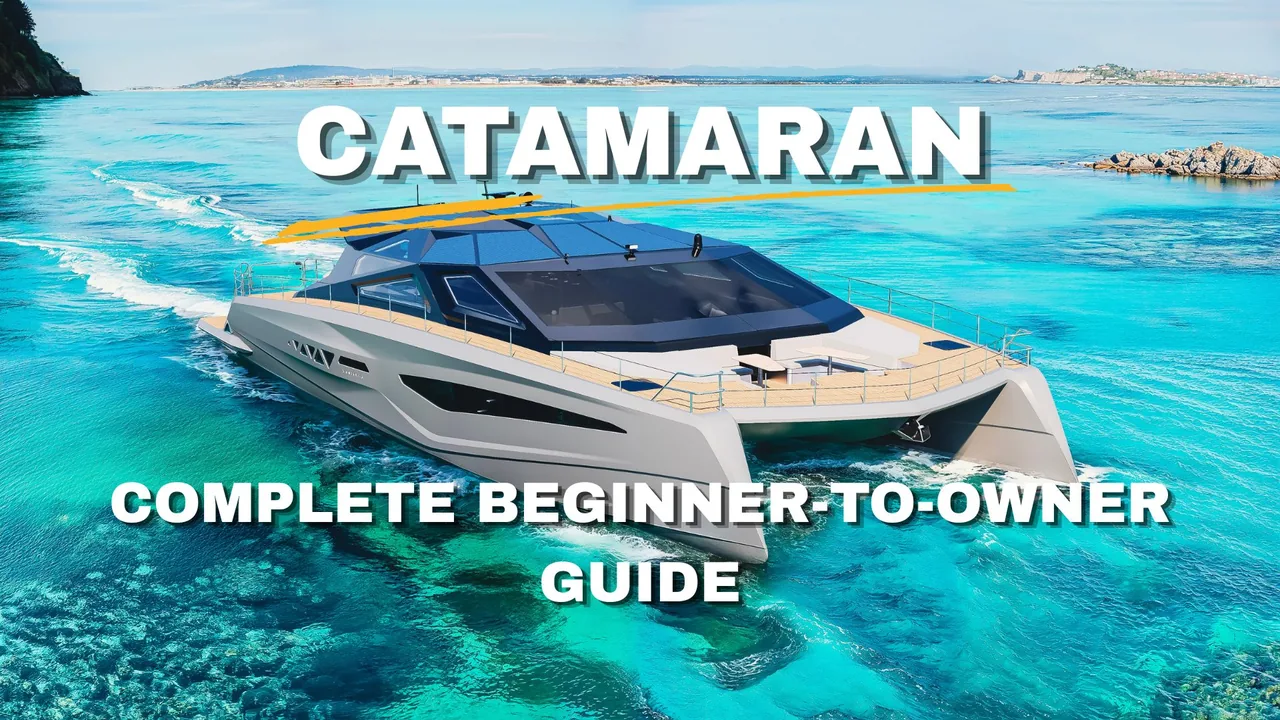
A catamaran is a boat or yacht built with two parallel hulls connected by a deck structure, instead of the single hull used in traditional boats.
Each hull is long and narrow, and they are spaced far apart across a wide beam. Rather than relying on heavy ballast or a deep keel to remain upright, the vessel gains stability from the distance between the two hulls. The buoyancy is distributed to the outer edges of the vessel, which dramatically increases resistance to rolling.
This single design difference changes nearly everything about how the boat behaves in the water.
On a traditional yacht (called a monohull), the boat leans - sometimes significantly - when wind or waves act on it. That leaning, known as heel, is actually part of its stability system.
A catamaran works differently.
Because the buoyancy is separated into two hulls, the boat does not need to lean to balance forces. Instead, the opposing buoyancy of the second hull counteracts motion, keeping the platform level.
In practical terms:
A monohull balances itself with weight.
A catamaran balances itself with geometry.
That is why even in moderate seas, most cruising catamarans remain nearly flat, often heeling only a few degrees while underway.
This stability is not just a comfort feature - it is the foundation for nearly every advantage associated with catamarans: space, efficiency, safety perception, and long-range cruising capability.
But to really understand why catamarans behave so differently at sea, you must first understand the physics behind the two-hull design.
Why Do Catamarans Have Two Hulls? (The Physics That Changes Everything)
To understand why catamarans feel so different at sea, you have to forget the idea that boats stay upright because they are heavy.
That is actually how most traditional yachts work.
Traditional monohull vessels typically achieve stability through a combination of hull shape (form stability) and, in some cases, ballast placed low in the vessel. As external forces such as wind or waves cause the boat to heel, the vessel’s center of gravity and buoyancy interact to create a righting moment that returns it upright. - part about lead is mostly for sailing monohulls
A catamaran uses a completely different principle.
Instead of stability coming from weight, it comes from distance.
The two hulls are placed far apart across the width of the vessel. Because buoyancy exists in both hulls and they are separated by a wide beam, the moment a wave or wind tries to tip the boat, the opposite hull resists it. The farther apart the hulls are, the stronger this resistance becomes.
Naval architects call this the righting moment - the force that returns a boat back to level.
On a catamaran, the righting moment is created by geometry, not ballast.
When a wave pushes one side, the buoyancy of the other hull counters the motion, so the boat stays nearly flat. This gives the vessel a very high resistance to rolling, meaning it takes a large amount of energy to make the boat noticeably lean.
That single concept explains most of what owners notice immediately when they step aboard:
• drinks don’t slide off tables
• people can walk normally
• cooking is possible underway
• far less seasickness occurs
Because the boat isn’t constantly trying to balance itself through motion.
Buoyancy and How a Catamaran Floats
Both monohulls and catamarans float because of buoyancy - the upward force generated when a hull displaces water equal to its weight.
The key difference lies not in buoyancy itself, but in how displacement is distributed.
A catamaran spreads its displacement across two long, slender hulls with a high length-to-beam ratio. This geometry reduces wave-making resistance, particularly in displacement and semi-displacement speed ranges.
This is extremely important.
Water resistance - especially wave-making drag - is one of the primary factors limiting speed and fuel efficiency. Because slender hulls generate smaller wave systems, well-designed power catamarans can achieve comparable or higher speeds with reduced energy demand within their optimal operating range.
This is one of the reasons modern long-range power catamarans are gaining popularity: they combine interior volume with improved efficiency, particularly at cruising speeds.
Why Catamarans Don’t Heel Like Sailboats
If you have ever watched sailboats underway, you’ve seen them sailing at dramatic angles. That is not a problem - it is how they are designed to work.
A monohull must lean to counteract the sideways force of wind.
A catamaran does not need to.
Because buoyancy is distributed across two hulls, the vessel resists heeling so effectively that cruising catamarans typically lean only about 5–10 degrees even in strong wind.
Instead of leaning, a catamaran tends to stay level and move forward.
This changes the onboard experience significantly. Rather than adjusting your body to the boat, the boat behaves closer to a stable platform - more like standing on a floating terrace than riding a vehicle.
How a Catamaran Moves Through Water
At low speeds, catamarans move as displacement vessels - meaning they glide through the water supported by buoyancy. Their narrow hulls produce small wake patterns and minimal resistance.
As speed increases, some power catamarans transition toward semi-planing behavior, where hydrodynamic lift begins helping support the boat. Because there are two hulls instead of one large hull, their wave systems interfere less with each other, further reducing drag.
The result is a combination that is difficult to achieve in a single-hull yacht:
• stability
• efficiency
• and speed
At the same time.
And that is the real reason catamarans have grown from small sailing craft into luxury ocean-crossing yachts.
But the twin-hull layout does more than change physics - it changes engineering design completely.
In the next section we’ll look at how naval architects actually design a catamaran, including hull shape, bridge deck clearance, and why beam width matters more than length.
Engineering & Design: How Catamarans Are Built for Stability, Efficiency, and Comfort
Once you understand why catamarans have two hulls, the next question becomes far more interesting:
How do naval architects actually design them to perform well in the real ocean?
This is where catamarans separate themselves from being “just wide boats” and reveal why modern designs can combine speed, comfort, and long-range capability in a way traditional yachts struggle to match.
Hull Design: Why Catamaran Hulls Are Long and Narrow
A defining feature of every catamaran is the shape of its hulls.
Instead of one wide body pushing a large volume of water aside, a catamaran uses two slender hulls, each with a high length-to-beam ratio. In many cruising and power catamarans, this ratio is 8:1 or higher.
Why does this matter?
Because the main source of resistance for a boat moving through water is not friction - it is wave creation.
Wide hulls create large bow and stern waves, which cost energy to maintain. Narrow hulls create smaller waves, which means less energy is wasted. By splitting displacement across two thin hulls, a catamaran reduces total wave-making resistance compared to a single hull of equal weight.
Naval architects then carefully space the hulls so the wave patterns from each hull interfere as little as possible. When done correctly, some of the wave energy partially cancels out, further lowering drag.
This is one of the reasons catamarans can cruise efficiently at speeds that would require significantly more power in a monohull.
Beam Width: Stability Comes From Distance, Not Weight
Beam - the overall width of the vessel - is one of the most critical design parameters in a catamaran.
While a monohull’s beam mainly affects interior space, a catamaran’s beam directly determines stability.
The wider the distance between the hulls, the greater the righting moment. That means the buoyancy of the leeward hull is farther from the center of gravity, creating strong resistance to rolling.
It is common for cruising catamarans to have beams equal to 50–60% of their length. For example, a 40-foot catamaran may be over 24 feet wide.
However, designers must balance beam width carefully:
• Wider beam increases stability and interior volume
• Excessive beam increases marina costs and limits slip availability
• Beam affects bridge-deck clearance and structural loads
A well-designed catamaran finds the balance where stability is maximized without compromising usability or offshore performance.
Bridge-Deck Clearance: The Difference Between Comfort and Pounding
One of the most misunderstood - yet most important - aspects of catamaran design is bridge-deck clearance.
The bridge deck is the platform connecting the two hulls. When waves pass between the hulls, they rise toward this deck. If clearance is too low, waves strike the underside of the bridge deck, causing slamming or pounding.
This is not just uncomfortable - it reduces speed, increases structural stress, and makes offshore passages exhausting.
Multihull experts generally recommend bridge-deck clearance of at least 5–6% of the vessel’s length overall (LOA). For example, a 45-foot catamaran should have roughly 2.5 feet of clearance.
Design compromises do occur. Some charter-focused catamarans reduce clearance to increase interior headroom and saloon volume. Offshore-oriented designs prioritize clearance, accepting slightly smaller interiors in exchange for smoother passage in open water.
Experienced owners quickly learn that good bridge-deck clearance is one of the biggest contributors to comfort at sea.
Weight Distribution: Why Balance Matters More in Catamarans
Catamarans are efficient - but that efficiency comes with sensitivity.
Because the hulls are slender, weight distribution matters more than on monohulls.
Designers place heavy components - engines, fuel tanks, water tanks - symmetrically in each hull to maintain trim. If weight accumulates in one hull or too far forward or aft, performance suffers.
Poor weight distribution can lead to:
• increased drag
• reduced speed
• bow-stuffing in rough seas
• excessive transom immersion
This is why experienced owners avoid overloading catamarans with unnecessary equipment. The design rewards discipline - light, balanced boats perform noticeably better.
Modern composite construction helps enormously here. Vacuum-infused composites and carbon reinforcement can reduce displacement by up to 30%, improving efficiency and seakeeping at the same time.
Fuel Efficiency and Speed: Why Catamarans Go Farther on Less
When people say catamarans are efficient, it is not a marketing claim - it is measurable.
Comparative testing has shown power catamarans consuming 30–40% less fuel than equivalent monohull powerboats at the same cruising speed.
This comes from three combined factors:
• slender hulls with reduced drag
• partial planing behavior in modern power cats
• lighter composite construction
Many 40- to 50-foot power catamarans cruise comfortably at 20–25 knots using modest engines - speeds that would demand much higher fuel burn in a traditional yacht of similar volume.
For long-range cruising, this efficiency translates directly into extended range, fewer refueling stops, and lower operating costs.
Comfort in Waves and at Anchor
One of the most noticeable differences between catamarans and monohulls appears when the boat is not moving fast - at anchor or in beam seas.
Because of their high roll moment of inertia, catamarans roll more slowly and through smaller angles than monohulls.
At anchor, a catamaran typically lies on a bridle attached to both bows. This keeps the boat aligned with wind and waves, preventing the side-to-side sailing motion common in monohulls. The result is a stable, level platform where people can sleep, cook, and move freely.
For many owners, this alone is enough to justify the transition.
Safety & Ocean Performance: Are Catamarans Actually Safe at Sea?
Ask almost anyone unfamiliar with multihulls what they’ve heard about catamarans, and you’ll often get the same response:
“Aren’t they easy to flip?”
This belief has existed for decades, mostly originating from small beach catamarans and early racing designs. But modern cruising and luxury catamarans are engineered very differently.
To understand their safety properly, we need to separate myths from naval architecture.
Why Catamarans Don’t Heel Like Traditional Yachts
A traditional monohull sailboat is designed to lean - sometimes dramatically.
That leaning (heel) is part of how it stabilizes itself using ballast in the keel.
A cruising catamaran does not depend on ballast weight.
Instead, its stability comes from its wide stance. The buoyancy is spread across two hulls, so when wind or waves push the boat, the opposite hull provides counteracting force. Because of this, cruising catamarans usually heel only about 5–10 degrees, even in strong wind.
This level platform produces real safety advantages:
• crew can walk safely
• objects remain stationary
• cooking and movement are possible underway
• fatigue and seasickness are reduced
Reduced crew fatigue is not a small benefit - many offshore incidents occur because tired sailors make mistakes.
Capsizing: Myth vs Reality
The most common concern is capsizing.
Here is the important distinction:
A monohull is designed to self-right after rolling upside down.
A catamaran is designed to avoid capsizing in the first place.
Modern cruising catamarans have a low center of gravity and very wide beam. Lifting an entire hull out of the water requires extremely large force. Instead of flipping, waves tend to push the vessel sideways.
Naval architects design the righting moment so the boat slides and dissipates energy rather than rotating over.
And even in the extremely rare event of inversion, catamarans have buoyant watertight compartments that keep the structure afloat, significantly improving survival prospects.
In other words:
Monohull safety relies on recovery.
Catamaran safety relies on prevention.
Offshore Performance in Rough Seas
Modern ocean-capable catamarans are fully offshore vessels when properly designed and handled.
Their advantages in open water come from several characteristics:
1) Wave Behavior
Breaking waves tend to push a catamaran sideways rather than roll it.
2) Speed Advantage
Because they are typically faster off the wind than monohulls, catamarans can often avoid deteriorating weather by adjusting course or leaving a weather system’s path.
3) Stability
Their roll inertia reduces violent motion, making life onboard safer and more manageable during passages.
This is why multihulls are widely used in long-distance cruising regions such as the Caribbean and South Pacific.
Behavior in Storms
Like any vessel, safety depends on seamanship.
In heavy weather, catamaran sailors typically reduce sail early and may deploy drogues or sea anchors. Because the boat does not rely on ballast, it must avoid extreme pitch-pole situations caused by very steep following seas.
Good design features - especially adequate bridge-deck clearance and structural rigidity - help prevent wave impact and maintain control.
The important takeaway:
A well-handled cruising catamaran is not an unsafe vessel - it simply requires understanding different operating principles than a monohull.
Shallow-Water Capability (A Hidden Safety Advantage)
One of the most underestimated safety features of catamarans is actually unrelated to storms.
It is a draft.
Because they lack a deep keel, most cruising catamarans draw only about 3–4 feet of water.
This allows them to:
• anchor closer to shore
• avoid reefs
• enter shallow harbors
• cross sandbars at tide
• choose more protected anchorages
In cruising grounds like the Bahamas or Caribbean, this dramatically expands safe anchoring options - and often keeps the vessel away from heavy swell.
So the real question is not whether catamarans are safe.
The real question is:
They are safe in a different way than traditional yachts - engineered for stability, redundancy, and prevention rather than recovery.
Next, we move from safety to something owners care about just as much:
What is it actually like to live on one?
Owner Experience: What It’s Actually Like Living on a Catamaran
Specifications tell you how a boat performs.
But ownership decisions are rarely made from specifications alone.
Most people who eventually purchase a cruising yacht go through a predictable shift. At first they compare horsepower, speed, and price. Later they begin asking a different question:
“How will my life actually feel on this boat?”
This is where catamarans tend to change opinions.
Because the biggest differences between a catamaran and a traditional yacht are not only technical - they are lifestyle differences.
A Floating Apartment, Not a Moving Vehicle
The first thing new visitors notice when stepping aboard a catamaran is not speed.
It is the absence of motion.
On a monohull yacht at anchor, the boat often rolls from side to side. Plates slide slightly, cabinets creak, and walking requires balance. Many experienced sailors accept this as normal.
A catamaran behaves differently.
Because of its wide beam and twin-hull stability, the vessel remains relatively level even when waves pass underneath. The platform feels closer to standing on a floating terrace than riding a vehicle.
This has real-world effects:
• you can cook without bracing yourself
• you can work on a laptop
• drinks stay upright
• children can walk safely
• sleeping is significantly easier
For many owners - especially families - this single factor becomes the reason they never return to monohulls.
Interior Space and Layout Advantages
One of the biggest surprises for first-time visitors is interior volume.
Because beam (width) is so large, a catamaran of a given length often provides substantially more usable living space than a traditional yacht of the same length.
Instead of one narrow interior corridor, the living areas are spread across:
• two hulls
• a full-width bridge-deck saloon
• large cockpit entertaining areas
The saloon - located above the waterline - often features panoramic windows and an open galley connected to the cockpit. This indoor-outdoor continuity is one of the defining characteristics of modern cruising catamarans.
Many models include amenities more similar to a waterfront home than a boat: full-size refrigeration, proper dining tables, walk-around beds, and generous storage.
Privacy for Owners and Guests
The two-hull configuration creates another benefit rarely appreciated until experienced: separation of living spaces.
Cabins are typically located at the ends of each hull. This allows owners and guests to sleep in completely separate areas, reducing noise and disturbance.
A common configuration includes four double cabins, each with its own bathroom - something difficult to achieve in a monohull without increasing length significantly.
For extended cruising or hosting family and friends, this dramatically improves comfort and privacy.
Long-Range Cruising and Family Use
Catamarans are particularly well suited for long-term cruising.
Their stability reduces fatigue during passages, while their storage capacity and fuel efficiency extend range. Fuel and water tanks are often distributed between the hulls, allowing balanced loading and increased capacity.
Families appreciate several practical advantages:
• reduced seasickness
• safer movement for children
• easier water access for swimming
• the ability to anchor close to beaches due to shallow draft
Because of these factors, catamarans have become extremely popular in global cruising regions such as the Mediterranean and Caribbean.
Ease of Handling (A Major Surprise to Many Owners)
One of the misconceptions about large yachts is that they require large crews.
In many cases, a catamaran is actually easier to maneuver than a similarly sized monohull.
The reason is the engines.
Catamarans typically have one or more engine in each hull, spaced far apart. This allows the captain to rotate the boat within its own length using opposing thrust - something very difficult for single-propeller boats.
Practical benefits:
• easier docking
• precise low-speed control
• often no need for bow thrusters
• manageable by a couple on mid-size vessels
For private owners who prefer independence rather than full-time crew, this becomes an important ownership advantage.
In short, the catamaran experience is less about enduring the ocean and more about living on it comfortably.
And this shift in comfort is one of the main reasons many experienced yacht owners move from traditional yachts to multihulls after their first long voyage.
Next, we’ll look specifically at power catamarans - and why they have rapidly become one of the most discussed segments in modern yachting.
Power Catamarans: Why This Type of Yacht Is Rapidly Growing in Popularity
For many years, catamarans were associated mainly with sailing.
But over the past decade, one segment has grown especially quickly:
the power catamaran.
Today, an increasing number of experienced yacht owners - including many who previously owned traditional motor yachts - are transitioning to power catamarans. The reason is not fashion or novelty.
It is practicality.
Power catamarans combine the comfort and stability of the twin-hull platform with the predictability and ease of engine propulsion.
Fuel Efficiency and Range
One of the most significant operating costs of any motor yacht is fuel.
Traditional motor yachts push a large single hull through the water, creating substantial resistance. To maintain cruising speeds, they require large engines and high fuel burn.
Power catamarans approach the problem differently.
Because each hull is narrow and creates less drag, the vessel can achieve similar cruising speeds using less power. Comparative testing has shown power catamarans consuming roughly 30–40% less fuel than comparable monohull motor yachts at equal speeds.
This changes how owners use the yacht.
Lower fuel consumption means:
• longer cruising range
• fewer refueling stops
• lower operating cost
• greater practicality for extended voyages
For long-distance cruising, efficiency is not a minor benefit - it determines how freely the boat can be used.
Stability Underway
Motor yachts often operate at consistent speeds for many hours. During long passages, constant rolling motion can become tiring for passengers.
The twin-hull platform significantly reduces this problem.
Because catamarans resist roll, motion at sea tends to be gentler and slower.
This improves passenger comfort, reduces fatigue, and helps prevent seasickness - particularly important for family members or guests who are not experienced boaters.
Many owners describe the difference simply:
a monohull feels like traveling on the water, while a catamaran feels like traveling across it.
Long Voyages and Practical Cruising
Efficiency and stability together create a practical advantage - range capability.
Power catamarans can cruise long distances at moderate speeds while consuming less fuel than similarly sized motor yachts.
This makes them well suited for coastal passages, island cruising, and extended trips without frequent marina stops.
For private owners, this increases flexibility. Travel planning becomes less dependent on fuel availability and more based on preferred destinations.
Comfort for Families and Guests
Not every yacht owner is an experienced sailor.
Many purchase a yacht to relax with family or host friends. For these owners, comfort matters more than extreme performance.
The stable platform of a power catamaran provides:
• safer movement onboard
• reduced motion discomfort
• easier sleeping during passages
• a more relaxed onboard atmosphere
Because the vessel remains relatively level, elderly guests and children often feel more comfortable moving around the boat.
Redundancy and Maneuverability
Power catamarans typically have an engine in each hull. This has two important consequences.
First, redundancy.
If one engine experiences a problem, the second can still provide propulsion and steering control.
Second, maneuverability.
With engines spaced far apart, the captain can control each side independently. The boat can pivot, rotate, and dock with precision - often without needing additional thrusters.
For owner-operators, this makes handling a large yacht significantly less intimidating.
Why Many Owners Are Switching
When you combine all of these factors - stability, efficiency, range, and living space - a pattern has emerged in the modern yacht market.
Many experienced yacht owners who previously owned monohulls transition to power catamarans after their first extended cruising experience. They often describe the change not as upgrading performance, but upgrading usability.
Instead of planning voyages around weather comfort, fuel stops, and crew fatigue, the yacht becomes easier to live with and easier to enjoy.
This shift is one of the main drivers behind the rapid growth of the luxury power catamaran segment worldwide.
Next, we’ll examine a very practical topic every serious buyer eventually asks:
How much does a catamaran actually cost - and what affects the price?
Buying a Catamaran: Sizes, Prices, and What Owners Should Realistically Expect
At some point every interested reader asks the practical question:
“How much does a catamaran actually cost?”
The answer is more complex than a single number, because catamarans span a very wide range - from modest cruising boats to fully custom luxury yachts.
Understanding pricing first requires understanding size categories.
Typical Catamaran Size Ranges
Catamarans are generally grouped into three broad categories:
Small Cruising Catamarans (30–40 ft)
These are typically entry-level sailing catamarans suitable for couples or small families. They provide basic accommodation, usually with cabins in each hull and a modest bridge-deck saloon.
They are often used for coastal cruising and short passages.
Mid-Size Cruising Catamarans (40–60 ft)
This is the most common ownership category worldwide.
Boats in this range offer full living spaces, multiple cabins, and sufficient storage for extended cruising.
Many charter fleets operate in this size because they balance comfort and manageability.
For many private owners, this is the first size where the boat begins to feel like a floating residence rather than a recreational vessel.
Large and Luxury Catamarans (60–100+ ft)
These are fully developed cruising yachts, often including professional-level systems, crew spaces, and long-range capability.
At this size the distinction between a “boat” and a “yacht” becomes clear - these vessels are designed for extended voyages, guest entertainment, and multi-week stays onboard.
Price Ranges (Realistic Expectations)
Prices vary by construction materials, propulsion, brand reputation, and customization, but general ranges are relatively consistent.
Sailing Catamarans
- ~40 ft: approximately $250,000 – $700,000
- 45–50 ft: roughly $500,000 – $1.5 million
Used vessels may cost significantly less depending on age and condition.
Power Catamarans
- 50–60 ft: approximately $800,000 – $3 million
Because they include engines, larger systems, and often higher build standards, power catamarans typically command higher prices than comparable sailing models.
Luxury and Superyacht Catamarans (80 ft+)
Luxury custom catamarans may exceed $4 million to $10+ million, depending on specification and materials.
At this level, pricing depends heavily on customization, interior design, and technology integration rather than just size.
Ownership Costs Beyond Purchase Price
A yacht’s purchase price is only the beginning. Responsible buyers also consider annual operating costs.
Typical ongoing expenses include:
• engine servicing for twin engines
• hull cleaning and maintenance
• insurance
• marina or mooring fees
• electronics and system upkeep
Insurance and docking for boats over 30 feet can reach several thousand dollars annually, and wide-beam vessels may require larger marina spaces.
Catamarans may have higher maintenance complexity because they have two engines and more systems, but they often offset some costs through fuel efficiency and resale strength.
Docking and Marina Considerations
Because catamarans are wider, they require larger slips.
In some marinas a catamaran may occupy the space of two monohulls, and docking costs can be 25–100% higher depending on location.
Monthly rates for a mid-size vessel can exceed $1,200–$2,000 in popular areas.
However, many owners anchor more frequently instead of staying in marinas. The shallow draft allows anchoring in sheltered bays closer to shore, often improving comfort while reducing fees.
Resale Value
One reason buyers consider catamarans a long-term investment is market demand. Demand for modern catamarans frequently exceeds supply, and late-model vessels often command strong resale prices.
Growth in charter operations and private cruising has increased the number of buyers entering the market. Some owners also place their vessels into charter programs, which can offset ownership costs.
By this stage, most serious buyers begin comparing hull types directly.
Which leads to the question almost every future owner eventually asks:
Is a catamaran actually better than a traditional yacht - or just different?
Next we will compare catamarans and monohulls objectively.
Catamaran vs Monohull: Which Is Actually Better?
At some point every serious buyer reaches the same crossroads of choosing the right one.
Not “Which brand should I buy?”
But:
“Should I choose a catamaran or a traditional yacht?”
This question has existed for decades, and the honest answer is not that one is universally superior.
They are built around completely different design philosophies.
A monohull yacht is optimized for tradition, simplicity, and performance in certain sailing conditions.
A catamaran is optimized for stability, living comfort, and efficiency.
Understanding the trade-offs is far more useful than trying to declare a winner.
Stability and Comfort
This is the area where the difference is immediately obvious.
A monohull relies on a heavy keel and ballast for stability, so it leans significantly under sail and rolls more at anchor. Some sailors enjoy this motion - they consider it part of the experience.
A catamaran uses beam width instead of ballast, which allows it to remain nearly level, typically heeling only a few degrees.
Practical effect:
Monohull: feels like traveling on a boat
Catamaran: feels like living on a platform
For families and long stays onboard, this single factor often becomes decisive.
Interior Space
Because catamarans are much wider, they provide significantly greater usable living area for the same length.
The two-hull configuration allows multiple cabins, separate sleeping areas, and large saloons above the waterline.
Monohulls, by contrast, concentrate all interior space inside a single narrow hull. This limits layout flexibility but reduces marina width requirements.
Safety Characteristics
Both vessels can be safe offshore when properly designed and operated, but their safety philosophy differs.
Monohull safety: recovery-based
If rolled by a wave, the ballast keel helps the boat self-right.
Catamaran safety: prevention-based
Wide beam and distributed buoyancy make capsizing extremely unlikely.
Additionally, twin engines and redundant systems in catamarans improve maneuverability and control.
Speed and Efficiency
Performance depends on conditions.
Sailing upwind, monohulls often perform better because deep keels provide strong lateral resistance.
Off the wind and in powered cruising, catamarans typically achieve higher speeds for the same energy input because their slender hulls produce less drag.
Power catamarans, in particular, show significant fuel savings compared with motor yachts.
Draft and Cruising Access
Monohulls have deeper draft because of the keel. This improves upwind sailing but restricts shallow-water access.
Catamarans typically draw only a few feet of water.
This allows:
• anchoring near beaches
• entering shallow bays
• accessing more remote cruising areas
For cruising regions like the Bahamas, this becomes a major practical advantage.
Costs
There are trade-offs.
Catamaran disadvantages:
- higher purchase price
- wider docking requirements
- more systems to maintain
Monohull advantages:
- lower purchase price
- easier marina availability
- simpler systems
So Which Should You Choose?
The decision usually depends on intended use:
Choose a monohull if:
- you prioritize traditional sailing performance
- you enjoy active sailing
- marina availability is important
Choose a catamaran if:
- you plan long stays onboard
- comfort matters
- you cruise with family or guests
- stability and efficiency are priorities
Neither is objectively better - but they suit different lifestyles.
Which leads to a final foundational question many new readers still ask:
Is a catamaran actually considered a yacht?
Frequently Asked Questions About Catamarans
Is a Catamaran a Yacht?
Yes - a catamaran can absolutely be a yacht.
The word yacht simply refers to a recreational vessel designed for leisure cruising or travel, typically above about 30 feet in length. When a catamaran is built for cruising, comfort, and extended voyages, it falls squarely within that definition.
Luxury catamarans exceeding 80 feet often include full-size staterooms, large entertaining areas, and long-range capability comparable to traditional superyachts.
In other words, the hull shape does not determine whether something is a yacht - its purpose and capability do.
Are Catamarans Safe?
Modern cruising catamarans are considered safe offshore vessels when properly operated.
Their wide beam and distributed buoyancy make capsizing extremely unlikely, as the boat resists rolling rather than relying on ballast recovery.
They also include redundancy from twin engines and multiple watertight compartments, allowing continued control even if one system fails.
They do not self-right like a monohull, but they are engineered to avoid capsize rather than recover from one.
Are Catamarans Faster?
Often, yes.
Because their slender hulls create less resistance, catamarans can achieve similar or higher speeds with less power than monohulls. Power catamarans in particular show significant fuel efficiency improvements at equal cruising speeds.
Sailing performance varies by direction: monohulls often perform better directly upwind, while catamarans are typically faster off the wind.
Why Are Catamarans More Stable?
The stability comes from geometry.
Instead of relying on a heavy keel, the buoyancy is spread across two hulls. The distance between them creates a strong righting moment that resists rolling. Cruising catamarans typically heel only a few degrees even in strong winds.
This is why onboard life feels calmer and more comfortable.
Why Are Catamarans More Expensive?
They require more material and engineering.
Two hulls, wider structures, twin engines, and larger living spaces increase construction complexity and labor. Wider beam also increases marina costs and infrastructure requirements.
However, many owners consider the higher price justified by improved comfort, efficiency, and resale demand.
How Big Is a Typical Catamaran?
Cruising catamarans commonly range from about 40 to 60 feet, while luxury models can exceed 80 – 100 feet.
At larger sizes they function less like recreational boats and more like private floating residences capable of extended voyages.
Why Catamarans Are Changing Modern Yachting
For most of boating history, the single-hull yacht dominated recreational sailing and motor cruising. That design still serves many purposes well.
But changing ownership patterns have altered priorities.
Today many yacht buyers are not seeking a vessel purely for the experience of operating a boat. They are seeking a platform for travel, relaxation, and extended time on the water with family and guests.
The catamaran addresses those priorities differently.
Instead of relying on ballast and motion, it relies on stability.
Instead of sacrificing comfort for performance, it balances both.
Instead of short excursions, it supports long stays aboard.
That is why catamarans have moved from niche designs into one of the fastest-growing segments of the global yacht market. Owners increasingly value usable space, efficient range, and a calm onboard experience - qualities the twin-hull configuration naturally provides.
Whether a catamaran is the right yacht ultimately depends on how someone intends to use it.
But understanding how it works - and why it behaves differently - allows a future owner to make that decision based on knowledge rather than assumption.
And that, more than anything else, is the purpose of this guide
Interested in learning more about LANIAKEA or discussing your own custom yacht project?
Contact Us